
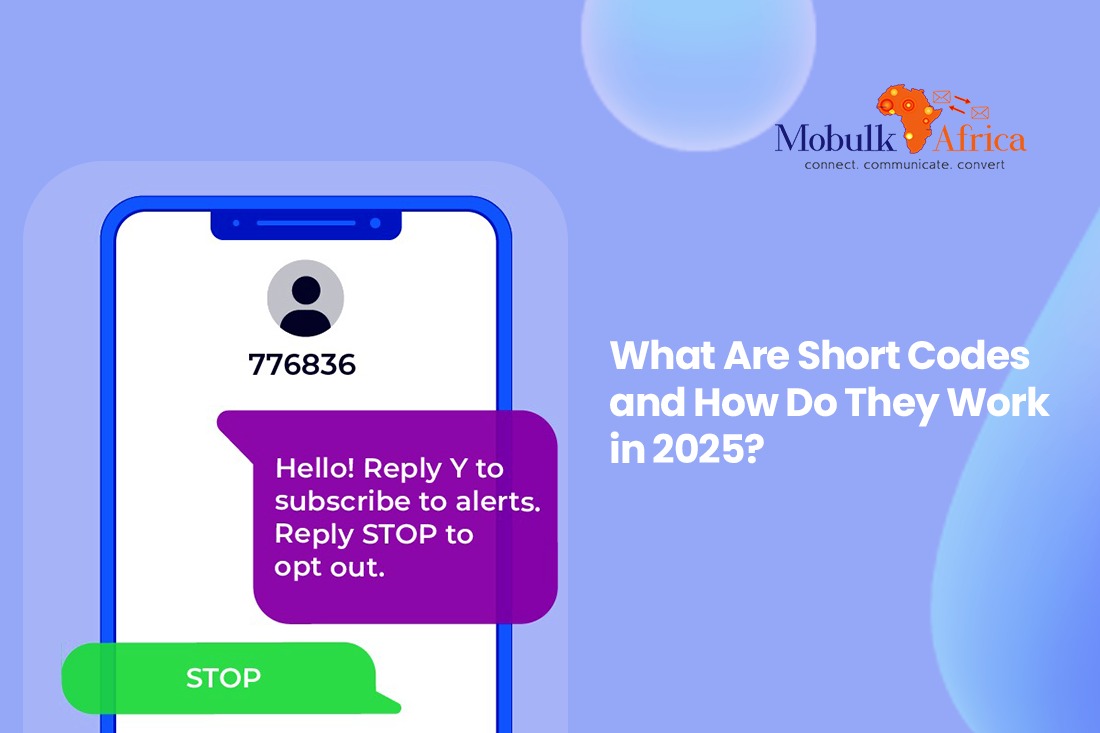
In a world increasingly driven by mobile communication, short codes continue to stand tall as a vital channel for businesses in Africa and beyond. While messaging apps and AI-powered chat systems gain traction, short codes remain relevant in 2025 because of their simplicity, speed, and reach — even in areas with limited internet connectivity. Whether you’re launching a marketing campaign, offering customer support, or enabling service interactions, short codes are an essential tool in your communication strategy.
In this blog, Mobulk Africa dives into the evolution of short codes, how they work today, and why they’re still a top-tier option for businesses seeking efficient, scalable mobile engagement.
What Are Short Codes?
Short codes are special telephone numbers, usually 5 to 6 digits long, used for sending and receiving SMS (Short Message Service) and USSD (Unstructured Supplementary Service Data) messages. They are easier to remember than regular mobile numbers and are designed for high-throughput messaging.
There are two main types of short codes:
- Dedicated Short Codes: Reserved exclusively for one business.
- Shared Short Codes: Used by multiple businesses with unique keywords to differentiate messages.
Short codes can be used for:
- SMS marketing
- Customer support
- Payment processing
- Service subscriptions
- Two-factor authentication (2FA)
- Surveys, polls, and contests
How Do Short Codes Work in 2025?
Short codes are linked to SMS gateways operated by telecom providers or aggregators. Here’s how the process works:
- User sends an SMS to a short code (e.g., texting “JOIN” to 22345).
- The message hits the SMS gateway, which identifies the keyword and matches it with the appropriate action.
- The system sends an automated response or logs the user into a database depending on the service configuration.
- Additional interactions may follow, like confirmation messages, payment requests, or information sharing.
In 2025, this flow is enhanced with AI automation, analytics dashboards, and API integration, offering businesses real-time insights and automation capabilities that weren’t mainstream a few years ago.
Why Are Short Codes Still Relevant in 2025?
Despite advances in messaging technology, short codes remain irreplaceable for several reasons:
1. Universal Accessibility
Short codes work on all mobile phones, even feature phones, making them ideal for regions in Africa where smartphone penetration is still growing.
2. No Internet Required
Unlike email or apps, short code SMS works without internet access. This ensures message delivery in rural or low-bandwidth areas — a key factor in African markets.
3. Instant Reach
Messages sent via short codes are delivered within seconds, making them ideal for time-sensitive communication such as:
- OTPs (One-Time Passwords)
- Transaction confirmations
- Emergency alerts
4. High Engagement Rates
SMS still boasts a 98% open rate, and messages from short codes are easily recognizable, improving trust and encouraging action.
5. Regulatory Trust
Telecom regulators across Africa support the use of short codes because they’re traceable, secure, and easy to audit. Mobulk Africa works closely with regulators to ensure compliance with messaging laws.
Key Use Cases of Short Codes in 2025
1. Marketing Campaigns
Short codes are used to launch bulk SMS campaigns that promote offers, events, or new services. Businesses can send messages like:
“Flash Sale! Get 30% off all items today. Visit our store or reply YES to 22345 to claim.”
2. Mobile Payments and Wallets
Short codes support mobile transactions by enabling users to pay bills, top-up airtime, or check balances via simple commands.
3. Customer Support
By texting keywords to a short code, customers can access FAQs, support forms, or even initiate calls.
4. Voting and Polling
Short codes make it easy to run contests, surveys, or community polls by enabling fast two-way communication.
5. Healthcare and Education
In public service sectors, short codes support appointment reminders, health campaigns, school alerts, and education quizzes.
The Tech Behind Short Codes
Short codes rely on the following infrastructure:
- SMS Gateway Providers: Platforms like Mobulk Africa act as intermediaries between the telecom network and the business.
- Routing Engines: Ensure messages are delivered quickly and securely.
- Keyword Management Systems: Direct the correct response based on user input.
- APIs: Let businesses integrate short codes into CRMs, websites, or apps.
In 2025, smart platforms use AI to optimize message delivery times, analyze user behavior, and segment audiences for better results.
How Mobulk Africa Helps Businesses with Short Codes
Mobulk Africa is one of the leading mobile messaging providers in Africa, offering:
- Custom Short Code Setup (Dedicated and Shared)
- Keyword Management Tools
- 2-Way Messaging Support
- SMS Automation
- Integration with CRMs, POS, and payment gateways
- 24/7 Support and Compliance Consulting
We make it simple for African businesses to engage customers, automate communication, and grow their brand through trusted mobile channels.
Tips for Using Short Codes Effectively
Here are best practices for maximizing your short code investment:
Choose Easy-to-Remember Numbers
The simpler your short code, the easier it is for customers to remember and use it.
Use Clear and Catchy Keywords
Avoid confusing or lengthy commands. Use straightforward, relevant keywords like JOIN, INFO, WIN, or BUY.
Promote Your Short Code Everywhere
Use your short code in print ads, radio, websites, and social media to drive interaction.
Monitor and Analyze Interactions
Use analytics tools to track engagement rates, opt-ins, opt-outs, and response timing.
Stay Compliant
Ensure your campaigns comply with data privacy laws and telecom regulations. Always include opt-out instructions like “Text STOP to 22345”.
Short Codes vs Long Codes vs USSD
| Feature | Short Code | Long Code | USSD |
|---|---|---|---|
| Digits | 5–6 | 10+ | *Code# |
| Use Case | Mass messaging, opt-ins | Person-to-person messaging | Menu-driven interactions |
| Internet Needed | No | No | No |
| Speed | Very fast | Slower | Fast |
| Best for | Marketing, alerts, payments | Customer service | Surveys, balance checks |
Short codes offer the best blend of speed, trust, and scale, especially for bulk messaging and customer interactions.
The Future of Short Codes
Looking ahead, short codes in Africa are evolving to work alongside:
- Rich Communication Services (RCS)
- AI-powered chatbots
- Voice-based commands
- Integrated payment systems
- IoT alerts
However, the core strength of short codes — universal access and reliability — ensures they remain relevant well into the future.
Short codes are far from obsolete. In fact, they are more powerful than ever in 2025, especially in Africa where mobile communication drives business growth, civic participation, and service delivery.
At Mobulk Africa, we help businesses harness the full power of short codes to reach audiences, enhance customer experience, and drive measurable results. Whether you’re running a political campaign, selling cars, organizing an event, or offering health services, a short code can be your direct path to customer engagement.
Ready to get started?
Contact Mobulk Africa today and unlock the potential of short codes for your business.
Contact Mobulk Africa: Call/WhatsApp : 0795435940 | Email : dm@mobulkafrica.pro
Leave a Reply